What can you actually afford?
See a real number, not a rough guess: factor in your income, your partner's, and what you actually spend, not just a lender's multiple of salary.
Most affordability calculators just multiply your salary by a fixed number. That tells you what a bank might lend, not what your household budget can actually carry once the mortgage, bills, and everything else you already pay for are accounted for.
The lender's shortcut
4.5× salary
On a combined £70,000 income, that is roughly £315,000, as an example. It ignores the loan you're still paying off, a £400 childcare bill, or the fact one of you is about to drop to part-time.
Your household budget
What's left over
Start from what actually lands in your account each month: both salaries, minus existing loans, minus regular outgoings, minus what you want left over. That's the number that tells you what you can actually afford, and whether it still holds up if a rate changes.
What actually gets counted
- Real income, real outgoingsYour actual salary and your partner's, not a combined guess.
- What's already spoken forExisting loans, individual expenses, and savings, budgeted for before the new mortgage payment lands.
- One figure per personNot a single household number: what you'd have left in your budget, and what they'd have left, separately.
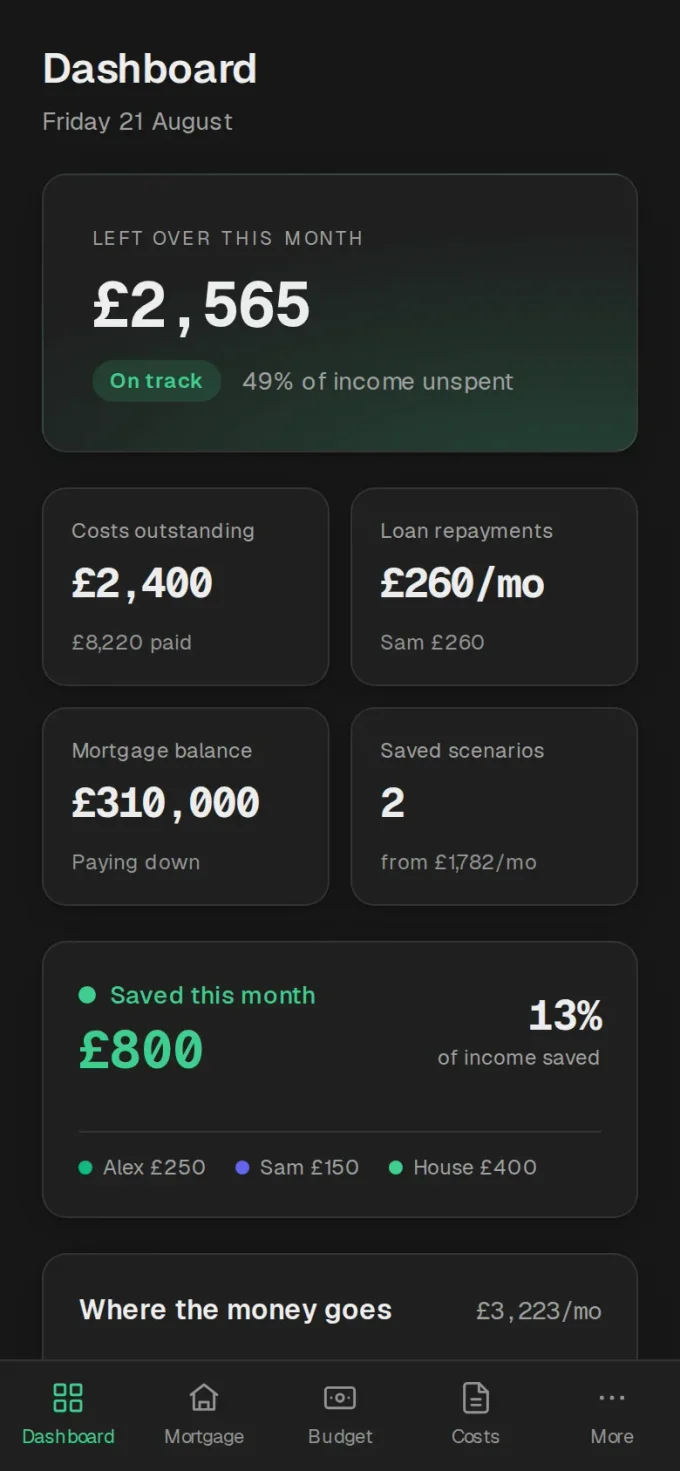
A budget like this doesn't stop being useful the day you move in. Your income changes, a fixed rate ends, a bill goes up: the number updates instead of going stale the moment you calculated it.
Try it with real numbers
Works out the exact monthly payment, stamp duty, and cash you'd need for a price you're considering. No login needed.
Stamp duty (SDLT)
£7,000Affordability
Example households, not your numbersIn the app, this mortgage gets checked against your real House Budget so you know what's actually left each month. These examples shuffle as you adjust the calculator, on purpose, since they're not calculated from what you've entered:
Free during early access. Ready to see it with your own numbers?